

The Euro-Atlantic Command Crisis: Why Washington Is Preparing Europe for a Post-American NATO
“I look forward to the day when Germany comes to the United States and says...

“I look forward to the day when Germany comes to the United States and says we are ready to take over SACEUR.”
— Matthew Whitaker, U.S. Ambassador to NATO, Berlin Security Conference, Nov 2025
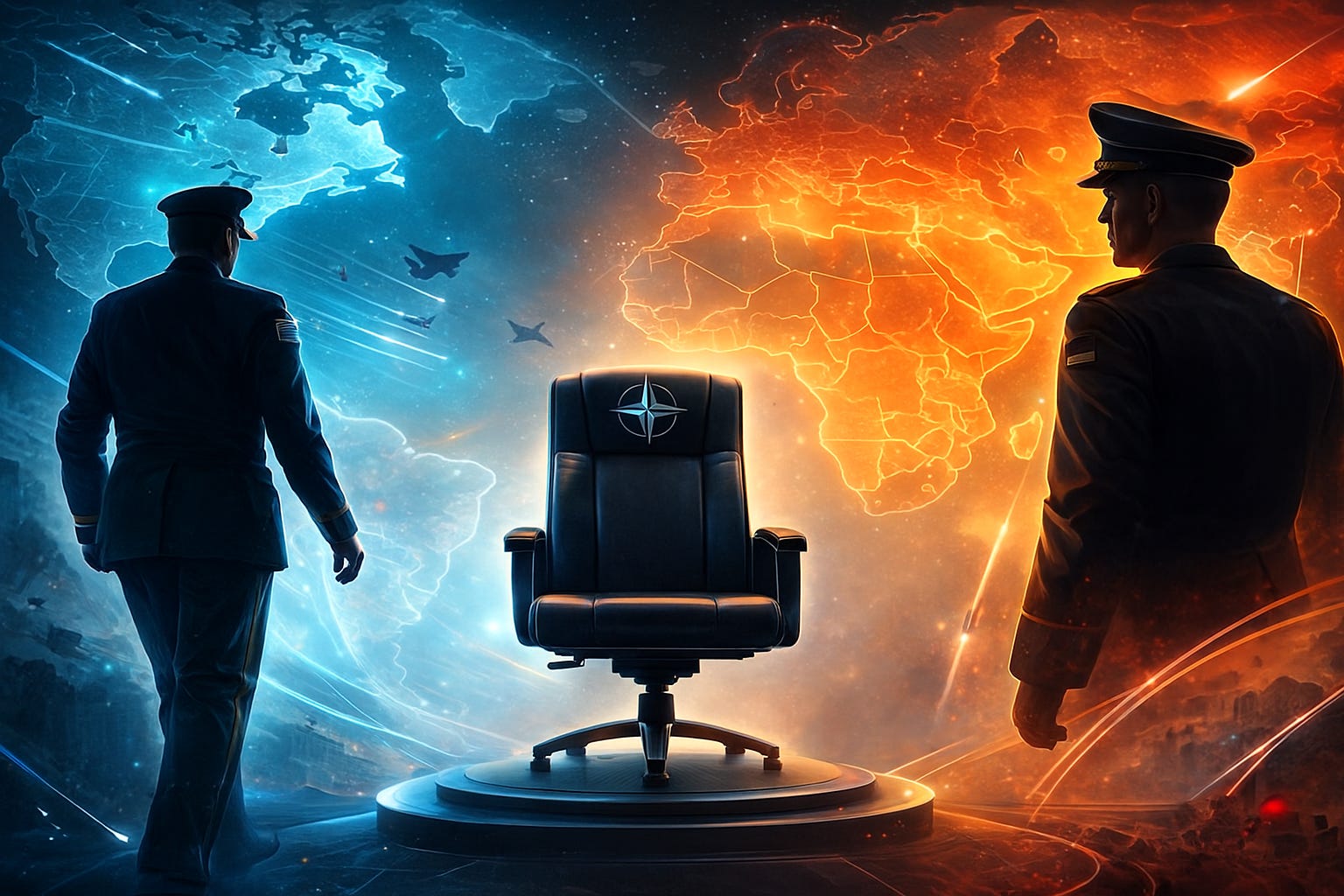
For seventy-five years, one rule in NATO has been sacred: the Supreme Allied Commander Europe (SACEUR) is always American. Not because the treaty demands it, but because the system requires it. U.S. nuclear weapons, U.S. intelligence, U.S. logistics, U.S. reinforcements. The entire credibility of the alliance flows through that single American node.
So when Whitaker imagined a future where a German general holds the job, the shock was real. Germany’s own representative on the panel looked visibly stunned. But the remark was misunderstood by almost everyone who reacted to it.
This wasn’t Washington demanding an immediate handover.
This was Washington signalling a long-term transition: roughly a 2035 project, not a 2026 experiment.
To understand why, we need to place Europe inside the wider geometry of American strategy.
The U.S. Isn’t Pulling Back Randomly: It’s Planning for a Decade of Strain
The Pentagon’s planning horizon tells a clear story:
• China now absorbs 40–45% of U.S. global military planning bandwidth.
• Indo-Pacific deterrence spending hit $14 billion for FY2025; double what it was five years ago.
• Internal U.S. war-gaming places the “Taiwan danger window” between 2027 and 2035.
Against that backdrop, the United States simply cannot afford to run Europe’s security architecture and prepare for the hardest military contest of the century.
Hence the new logic:
Europe must become defendable without 24/7 American supervision, long before the Indo-Pacific reaches peak risk.
Whitaker’s statement isn’t about now.
It’s about getting Europe mentally and politically ready for the next decade.
Why a German SACEUR Is Impossible Today

A non-American SACEUR is not just unlikely. It’s structurally blocked by the architecture itself:
• Europe hosts nearly 100 U.S. B61 nuclear bombs; all remain under American release authority.
• The SACEUR is simultaneously the head of U.S. European Command; a role no German (or anyone else) can legally hold.
• The U.S. provides 70–80% of NATO’s high-fidelity intelligence.
• About 90,000 U.S. troops are stationed or rotating across Europe under U.S. national command.
Change any one of these, and NATO’s deterrence credibility cracks.
Change all of them, and NATO becomes something else altogether.
This is why the U.S. isn’t attempting an immediate swap. It’s simply planting the idea of a future trajectory.
Germany’s Rising Ambition and Its Hard Reality
Chancellor Friedrich Merz has promised a historic rearmament:
Ambition:
• €152 billion annual defence budget by 2029
• 35 F-35s, Arrow 3 interceptors, Leopard 2A8 next-gen armor
• A goal of 203,000 troops in the Bundeswehr
• A permanent brigade in Lithuania by 2027
Reality:
• Manpower stuck near 182,000
• Ammunition stocks sufficient for 2–5 days of high-intensity conflict
• Readiness levels in some units remain under 70%
• The €100bn special fund is almost exhausted
Germany has the ambition of a future hard power, but the hardware, manpower, doctrine, and political culture are not yet aligned.
That gap is exactly why the U.S. is speaking in future conditional tense, not present imperative.
The Nuclear Arithmetic: Europe Has a Deterrent Gap It Cannot Ignore

Europe’s nuclear numbers speak bluntly:
France: nearly 290 warheads, fully sovereign
UK: nearly 225 warheads, dependent on U.S. systems
All other Europeans: zero
U.S. forward deployed: nearly 100 bombs, all under U.S. custody
There is no mathematically coherent “Eurodeterrent” that replaces the American umbrella.
Any future in which SACEUR becomes European must begin with a decade-long redesign of this nuclear geometry.
Washington knows this. That’s why the rhetoric is early; the structural shift is late.
Why the U.S. Is Offloading Europe While Expanding Security Roles in the Middle East
Here is the paradox:
The U.S. is pushing Europe toward autonomy while deepening security deals in the Middle East.
Contradiction?
Not when you examine the incentives.
Europe is a burden. The Middle East is leverage.
In Europe:
The U.S. has spent over $1.2 trillion subsidizing continental defence since 2001.
It gets stability, but not strategic leverage or financial returns.
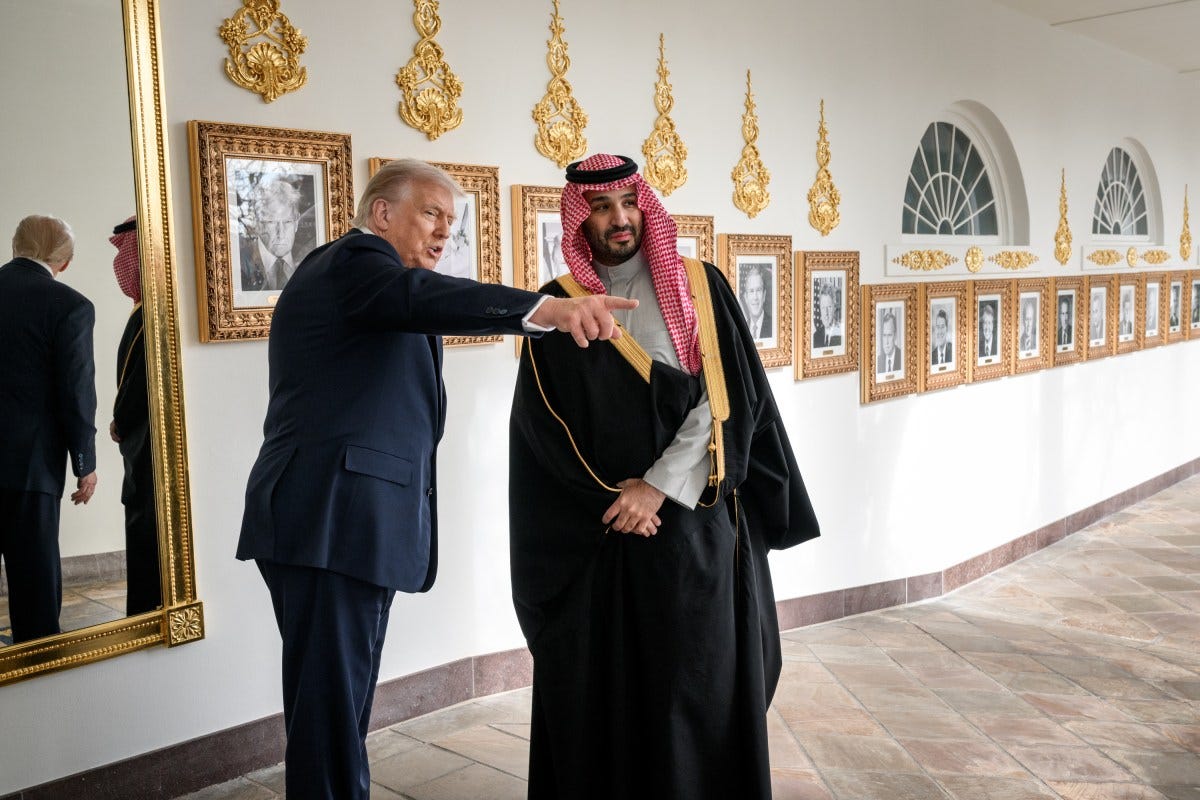
In the Middle East:
The U.S. receives both:
$70+ billion in arms sales since 2020
Access to chokepoints: Hormuz, Bab-el-Mandeb, Suez
Control of regional air defence networks
A decisive role in shaping Israel–Arab normalization
A direct counter to Iranian and Chinese influence
Put bluntly:
Europe drains American strength. The Middle East monetizes it.
That’s why Washington can reduce its permanent managerial role in Europe while expanding transactional security architecture in the Gulf and Levant.
The logic is not contradictory; it’s strategic triage.
The U.S. Grand Strategy Emerging From These Moves
If you zoom out, the architecture looks like this:
Europe:
“Stand on your own feet. I’ll still arbitrate the big decisions.”
Middle East:
“I will sell you security and keep the keys.”
Indo-Pacific:
“I cannot leave. This is the main event.”
Whitaker’s comment isn’t an isolated idea.
It’s part of a triangular strategy in which:
• Europe becomes less dependent
• The Middle East becomes more financially useful
• Asia becomes the theatre that decides global power
That’s the deeper meaning behind proposing a German SACEUR in the future tense.
The Real Interpretation of the Berlin Moment
The remark in Berlin did not signal a European command handover.
It signalled the beginning of a psychological re-ordering:
“The American cavalry will still come.
But it will no longer patrol the frontier for free.”
NATO is not in a leadership crisis today.
NATO is in a leadership transition that will unfold over a decade.
Germany cannot lead now.
Europe cannot deter alone now.
The nuclear puzzle cannot be solved now.
But the United States has decided to start the countdown anyway.
Because by the 2030s, America’s strategic bandwidth will be consumed by a region far from Berlin.
The Whitaker statement was not about Germany in 2025.
It was about Europe in 2035.
That’s all for this post today ladies and gentlemen.
Hope you liked it.
Team IB — Understandable, Unfiltered & Unbiased.
Stay tuned and comment your thoughts on this, and view our previous posts in case you missed them.
🔗 Stay Connected
📌 Instagram: [Click to visit] → memes, quick takes & daily updates.
📌 Substack: You’re already here→ check our previous posts, in case you missed them.
📝 Note: This space is for analysis, not advocacy. We break things down so you can think, not follow a script