

Everyone Wants a Backup Plan and BRICS Offers One
The list of interested states is growing. Turkey is exploring a second anchor beyond NATO. Nigeria wants development finance without Western conditionality....

The quiet movement around BRICS has become one of the more telling signals of how global politics is shifting. Countries that rarely cared about the platform are now exploring entry. Not because they believe in some grand alternative order but because they want room to negotiate in a world that is becoming harder to predict.
The New Crowd at the Door
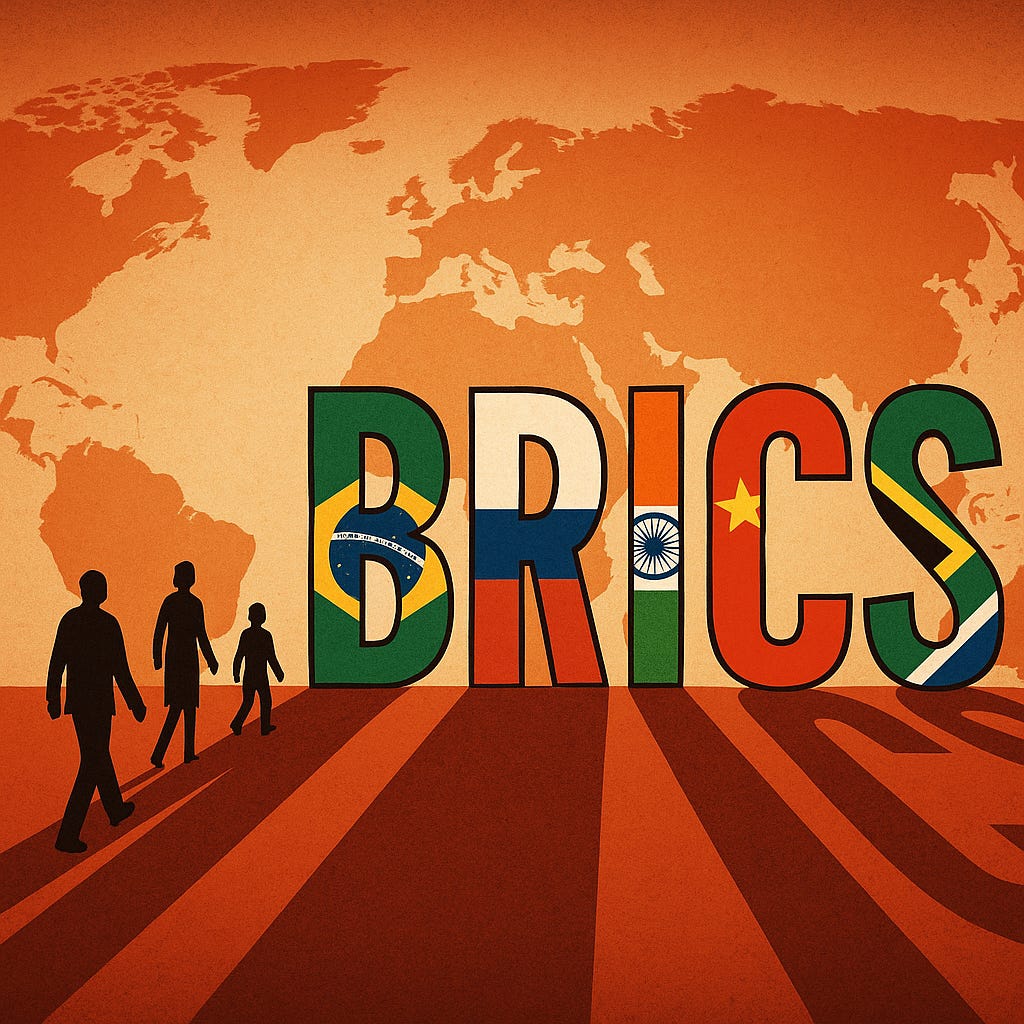
The list of interested states is growing. Turkey is exploring a second anchor beyond NATO. Nigeria wants development finance without Western conditionality. Thailand is diversifying trade pathways. Kazakhstan wants escape routes from the tight Russia China orbit. Malaysia and Uzbekistan want new financial partners. Cuba, Bolivia and Uganda want lenders who do not bring political templates along with credit. Their reasons differ but their instinct is the same. More options, more space and more leverage.
Why BRICS Attracts Them
BRICS offers practical advantages. The New Development Bank gives infrastructure finance without political instructions. Local currency trade reduces dependence on dollar based settlements. Membership carries symbolic importance for countries that want recognition as active players rather than peripheral ones. Above all, BRICS provides a shield. When major powers demand alignment, having an additional platform changes the equation.
What BRICS Actually Is
BRICS is not an alliance and not a counter West project. It is a bargaining platform for large and mid sized states that believe the global system needs another center of gravity. The expanded group represents nearly half the world population, a major share of global GDP in purchasing power terms and a dominant portion of global energy reserves. Its purpose is simple. Leverage. It allows members to negotiate with international institutions from a position that feels more balanced.
Changes BRICS Has Already Triggered
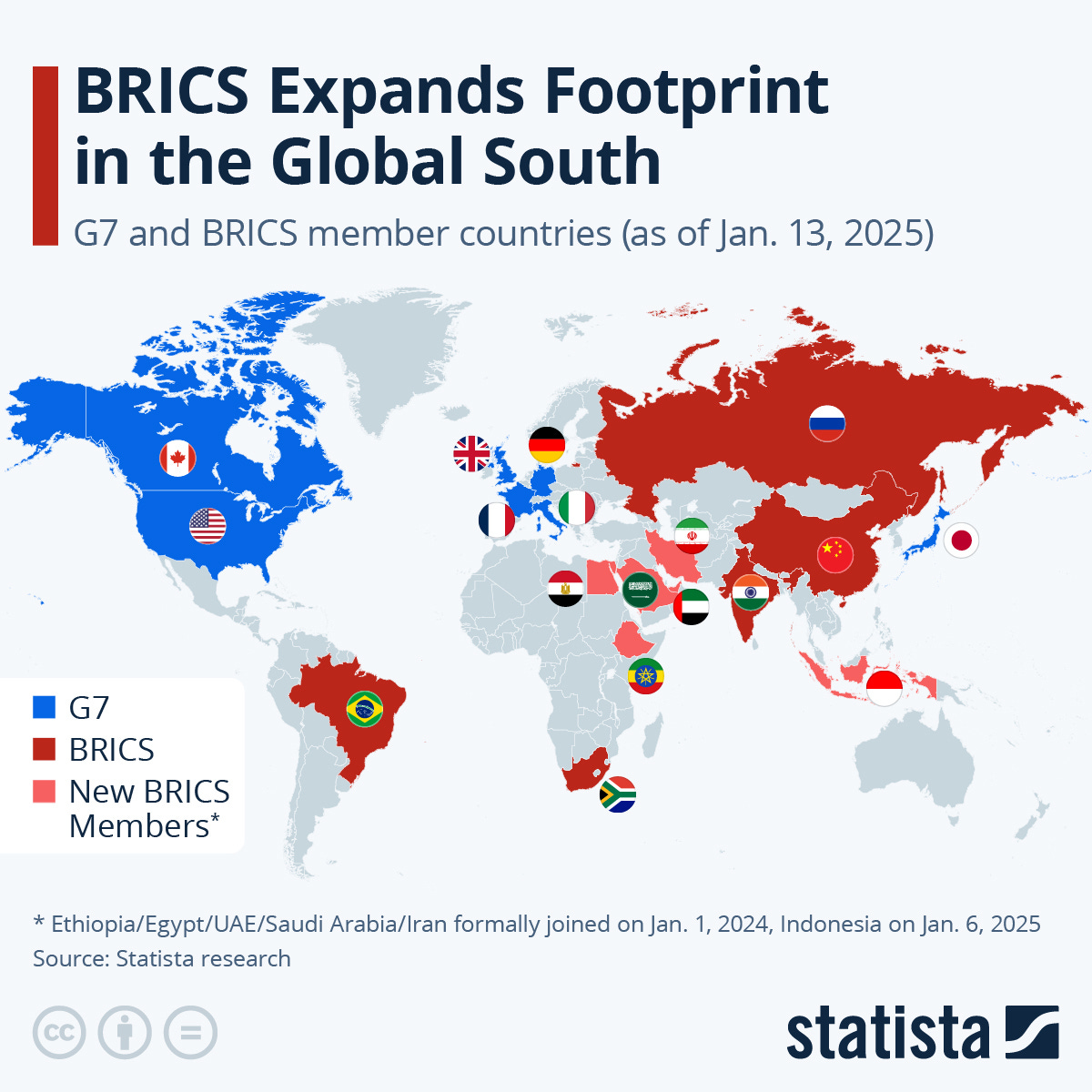
The expansion has normalised multipolar thinking. It has created new financial channels that reduce the monopoly of Western institutions. Local currency settlements are growing in scale. The idea that the world runs through a single political and financial architecture has faded. These changes are not dramatic but they are steady and long term.
The Appeal and the Anxiety
Supporters of BRICS point to the benefits. More choices for developing countries. More respectful lending terms. A sense of equality inside a group that does not treat them as lesser actors. For many governments this is a rare experience.
Concerns also exist. China’s economic weight shapes the bloc in ways everyone notices. Rivalries among members can easily stall progress. Expansion risks turning the group into a crowded room with blurred priorities. A world with parallel financial systems may look fairer but also more volatile.
The Countries Watching with Concern
The United States sees pressure on the dollar and on the influence that comes from controlling global financial circuits. Europe sees its long standing foothold in Africa weakening as BRICS members expand investments and political reach. Japan and South Korea see regional gravity drifting toward a China, India, Russia and Gulf alignment. Australia sees its Indo Pacific narrative becoming less central. Their concerns reveal how power shifts are often felt before they are fully visible.
The BRICS Structure Explained
The core group holds the main political weight. The BRICS Plus circle contains the new full members brought in through recent expansion rounds. The Partner category allows cooperation without commitments and has become the preferred entry point for countries testing their options.
India’s Position Inside the Bloc
India plays a distinctive role. It participates fully in BRICS while strengthening ties with the United States, Europe, Japan and Australia. It uses BRICS to push for global reforms and to prevent any single power from dominating the developing world. At the same time India keeps the bloc from drifting into an anti-West posture. It stands inside the room but keeps its independence intact.
The Financial Contest
A quiet rivalry shapes the development finance landscape. The New Development Bank provides loans based on practical needs. The Bretton Woods institutions provide larger pools of money but with conditions that many governments find intrusive or unrealistic. BRICS does not aim to replace them. It simply provides a choice. Choice is enough to shift the balance of negotiation.
Somewhere in the background a more ambitious thought keeps surfacing. A BRICS currency: neither agreed, nor designed. Yet the fact that governments can imagine such a possibility shows how global thinking is changing. That conversation belongs to a future piece.
Team IB — Understandable, Unfiltered & Unbiased.
Stay tuned and comment your thoughts on this, and view our previous posts in case you missed them.
🔗 Stay Connected
📌 Instagram: [Click to visit] → memes, quick takes & daily updates.
📌 Substack: You’re already here→ check our previous posts, in case you missed them.
📝 Note: This space is for analysis, not advocacy. We break things down so you can think, not follow a script